
ILL's Horror Design: Physics, Survival, and the Limits of What We've Seen
Team Clout's first-person horror hinges on reactive environments and scarce resources, not just striking creature designs.

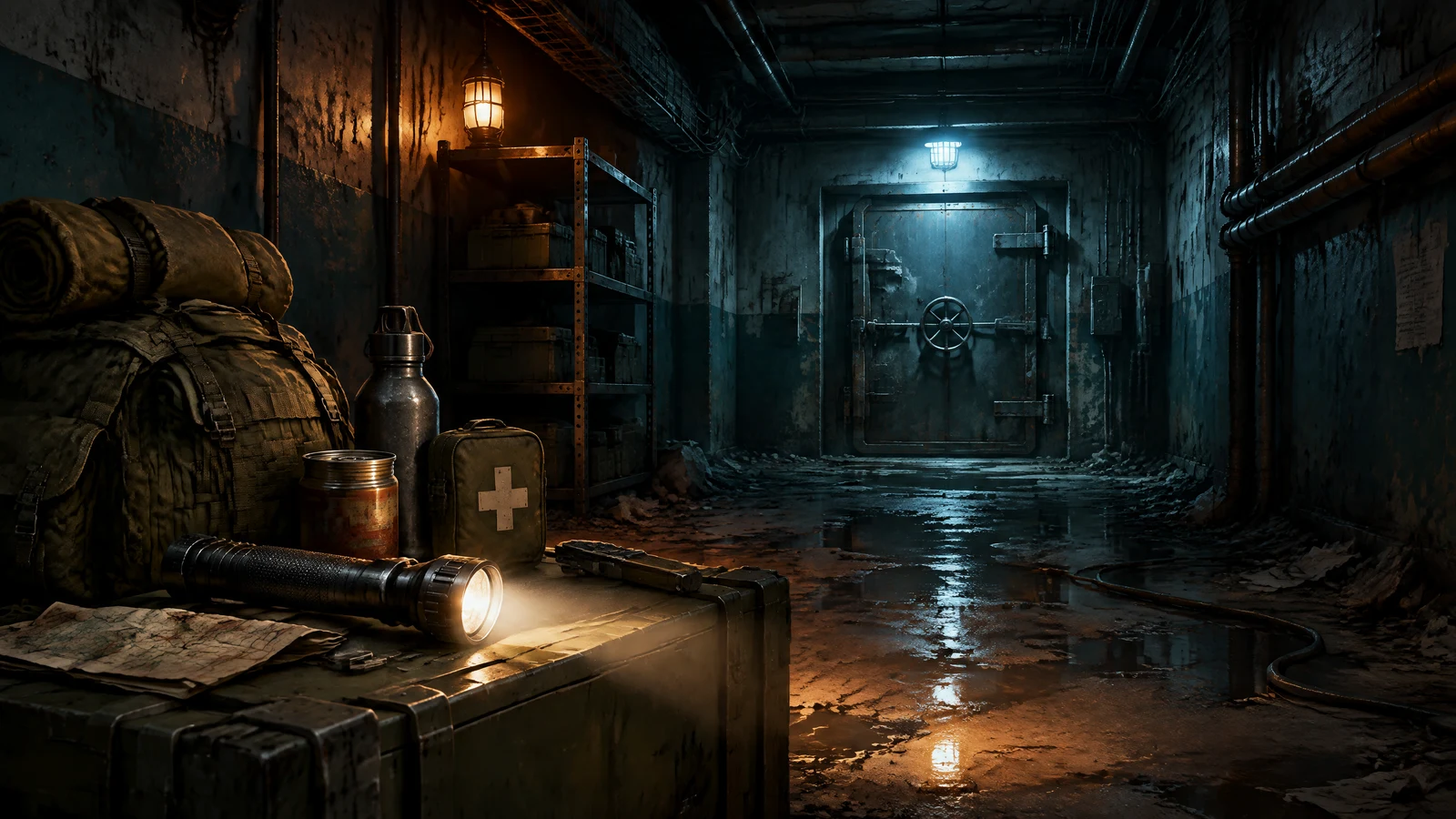
ILL Survival Systems
ILL's most interesting promise is not simply that its monsters look unsettling. Team Clout describes a first-person survival-horror game in which the environment reacts, resources run short, and the player has to make practical decisions under pressure. Those systems will decide whether the horror lasts beyond a striking trailer.
A Fort Built Around a Personal Story
The official premise places the protagonist inside a research fort overtaken by a mysterious threat. In a July 2025 PlayStation Blog interview, game director Maxim Verehin described a personal story tied closely to the setting, with isolation and hopelessness central to the atmosphere.
The same interview positioned the game between survival horror and intense first-person action. That matters for expectations: ILL is not being pitched purely as an exercise in hiding, nor as uninterrupted shooting. Its pacing has to make room for both vulnerability and confrontation.
Team Clout cited horror films with practical effects among its visual influences. That helps explain the emphasis on physicality, but a convincing design on screen and a satisfying encounter under player control remain different achievements.
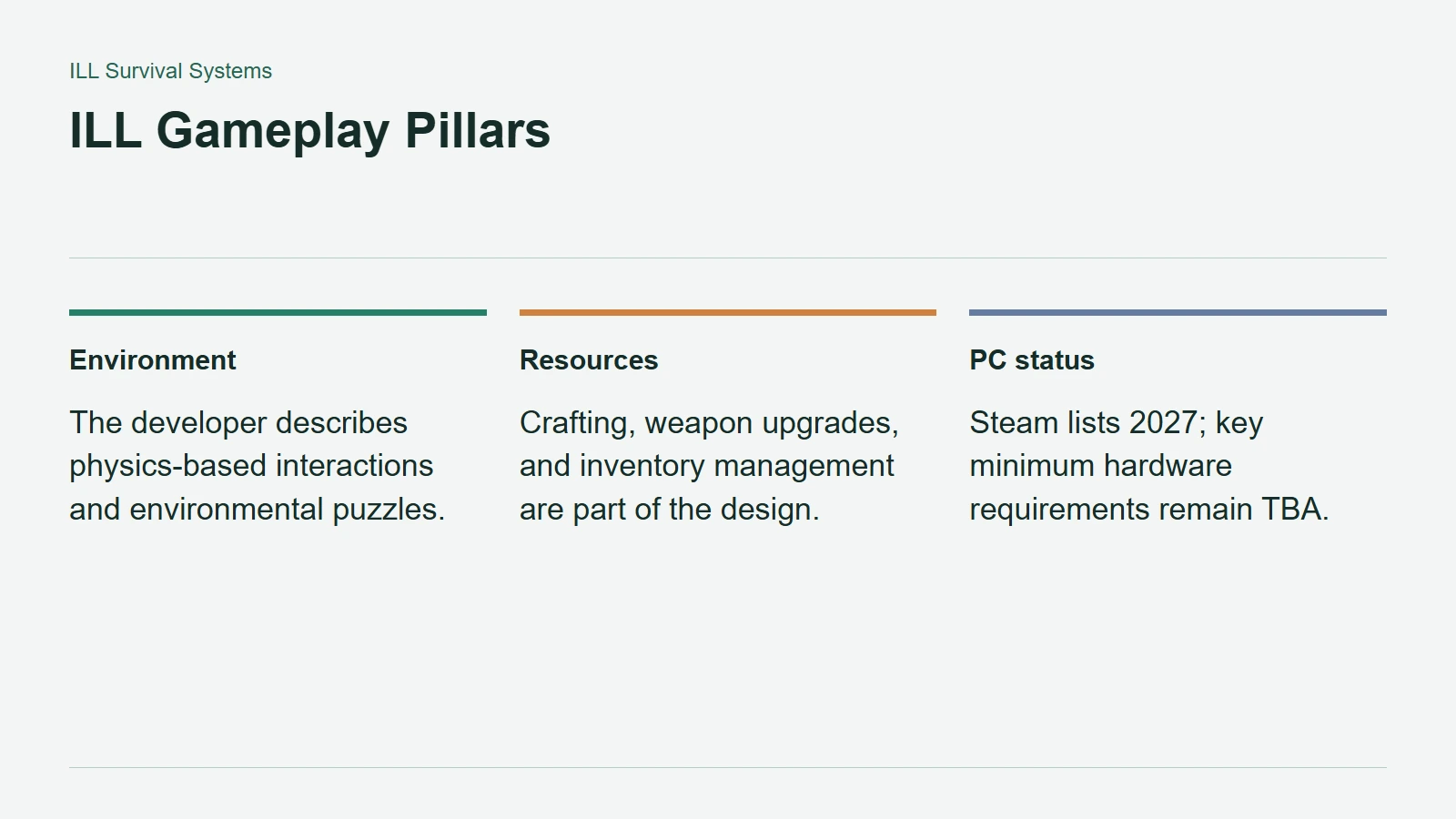
ILL Gameplay Pillars
Physics Has a Job Beyond Presentation
The official Steam description says physics affects environmental interactions and puzzle-solving. It also describes enemies reacting to their surroundings and to player actions. These are gameplay ambitions, not just claims about the appearance of an impact.
Verehin offered a more concrete example in the PlayStation interview: restoring electricity in one area can change conditions elsewhere, potentially leaving another space dark. That is the kind of interaction that can turn a practical solution into a new problem.
The team also describes exploration, crafting, weapon upgrades, and limited inventory resources. Together, those ideas suggest that an encounter could be shaped before the shooting starts, through what the player carries and which environmental changes they trigger.
The Questions a Trailer Cannot Settle
For a reactive horror game, clarity matters as much as unpredictability. Players need enough feedback to understand why a plan worked or failed. If an environmental reaction feels arbitrary, surprise can become frustration rather than tension. Whether ILL achieves that balance needs extended play, not inference from a short sequence.
Steam currently gives the game a planned 2027 release, with key minimum hardware fields still marked TBA. There is no basis in those placeholders for predicting a particular PC's frame rate.
The promising part is the connection between survival decisions and a responsive setting. The remaining test is whether those ideas form a coherent rhythm over a full game, with resource pressure, exploration, and combat reinforcing one another rather than competing for attention.