From Monopoly to Terraforming Mars: Board Games That Went Digital
The cardboard survived. The setup time did not.

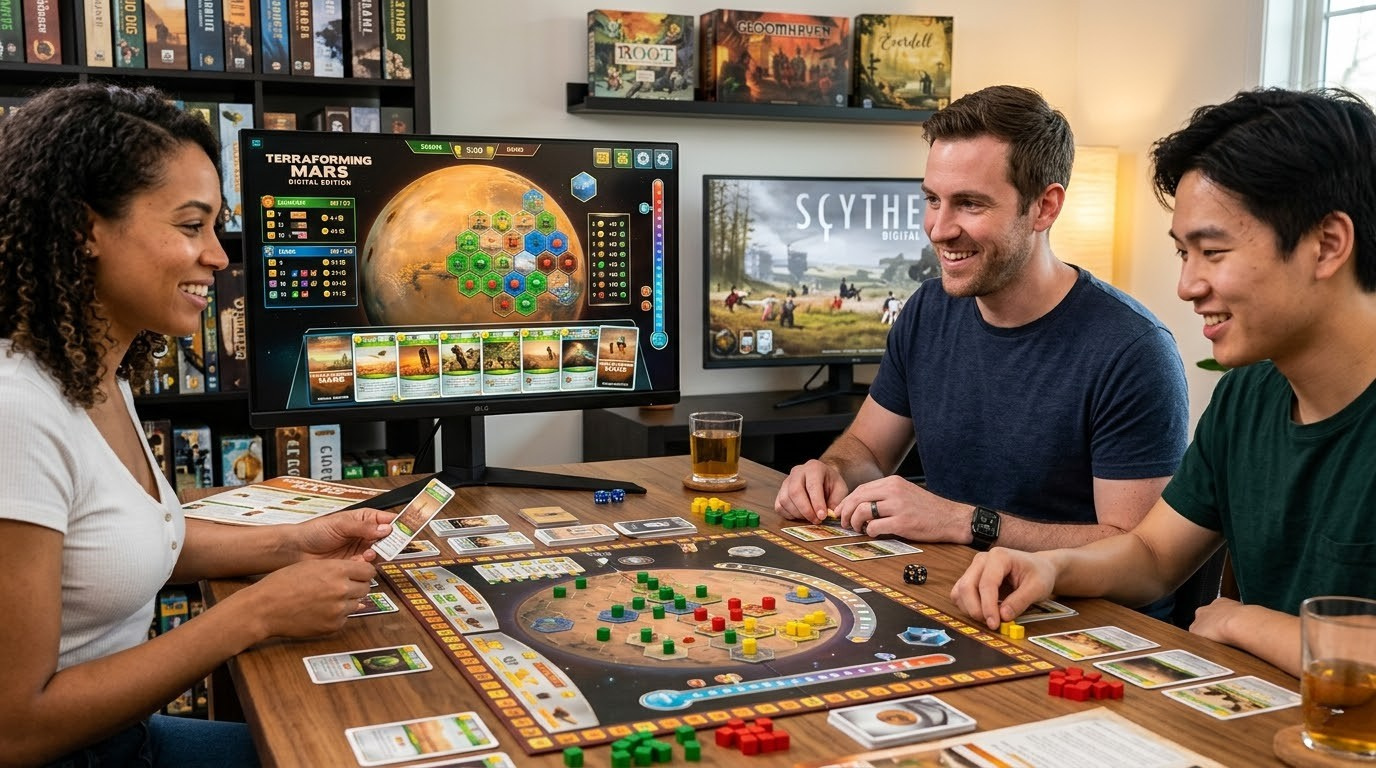
board games for pc
Some of the most played games on Steam started as boxes on a shelf. Monopoly has been selling since 1935 and has moved over 275 million physical copies worldwide. Catan, which essentially launched modern Eurogaming outside Germany when it released in 1995, has sold 45 million copies in over 40 languages as of 2025. These are not niche hobby products. They are cultural furniture. And yet here they are, on Steam, on your phone, on your Nintendo Switch.
The question worth asking is not whether board games translate well to PC. Enough of them do. The better question is what they gain, what they lose, and which kinds of games survive the transition with their soul intact.
The Classics: How Early They Went Digital
The first wave of digital board games happened faster than most people remember.
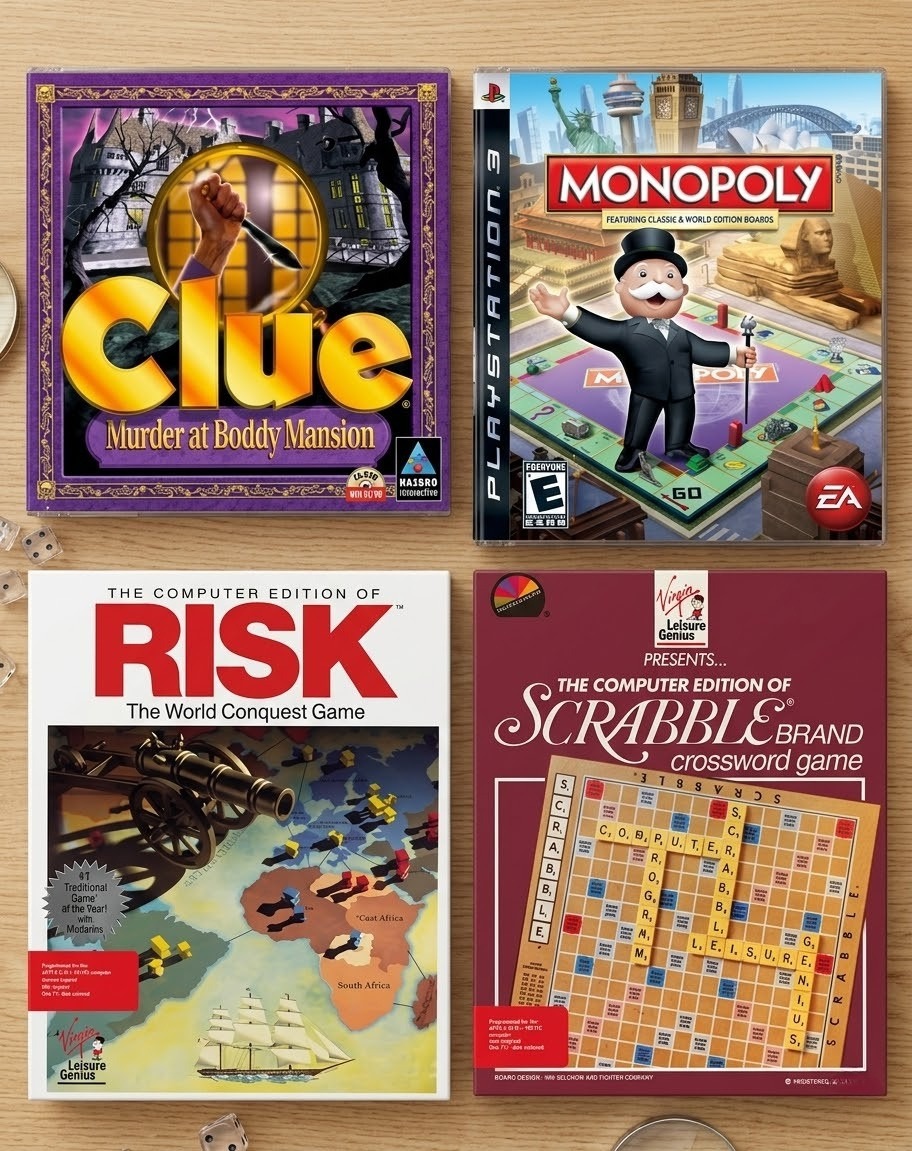
Scrabble got a computer edition for the Apple II in 1982. Risk followed in 1989 on MS-DOS, published by Virgin Mastertronic. Monopoly had licensed home-computer versions as early as 1985 on the BBC Micro, Amstrad CPC, ZX Spectrum, and MSX, with a higher-profile Windows and Mac release from Westwood arriving in 1995. Clue made it to Windows in 1998 under the title Clue: Murder at Boddy Mansion.
These were not passion projects. Publishers saw a licensing opportunity and took it. The results were mixed, often clunky, and typically forgotten. But the instinct was right: board games and PCs are structurally compatible in ways that, say, board games and film are not.
Ticket to Ride, a newer classic (2004, Spiel des Jahres winner that same year, had PC CD versions of the base game and Europe by 2006 and landed on Steam in 2012. Carcassonne, released in 2000 and Spiel des Jahres 2001, had a PC version by 2002 and made it to Xbox Live Arcade in 2007, before Asmodee Digital rebuilt it for Steam and Android in 2017. Catan took a slightly different route: two official PC titles in the late 1990s and early 2000s, later unified under Catan Universe, which launched online in 2017.
By 2020, almost every major board game had a serious digital edition. The question had shifted from "will this game get a PC port" to "which PC port is actually worth playing."
What Happens to the Rules
Here is the consistent truth across all of these adaptations: the rules stay. The experience changes.
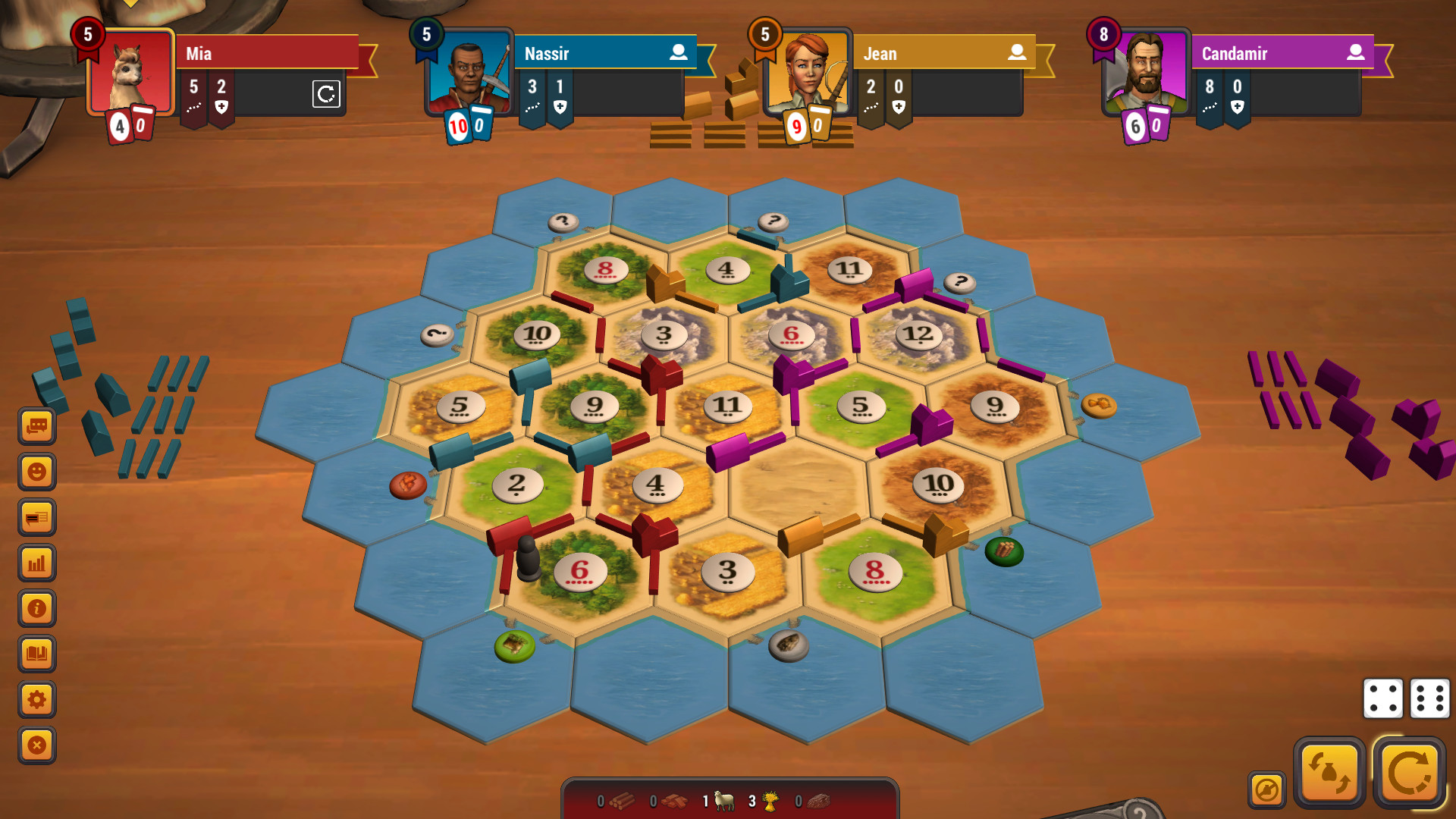
Catan Universe handles resource production, robber movement, longest road tracking, and army scoring without you touching a single card.
Ticket to Ride resolves end-game scoring, including hidden destination tickets and the longest-route bonus, the instant the last turn ends. In Carcassonne's digital version, the tile stack is shuffled automatically and the game always shows exactly how many tiles of each type remain, which is information you simply cannot track at a physical table without a spreadsheet.
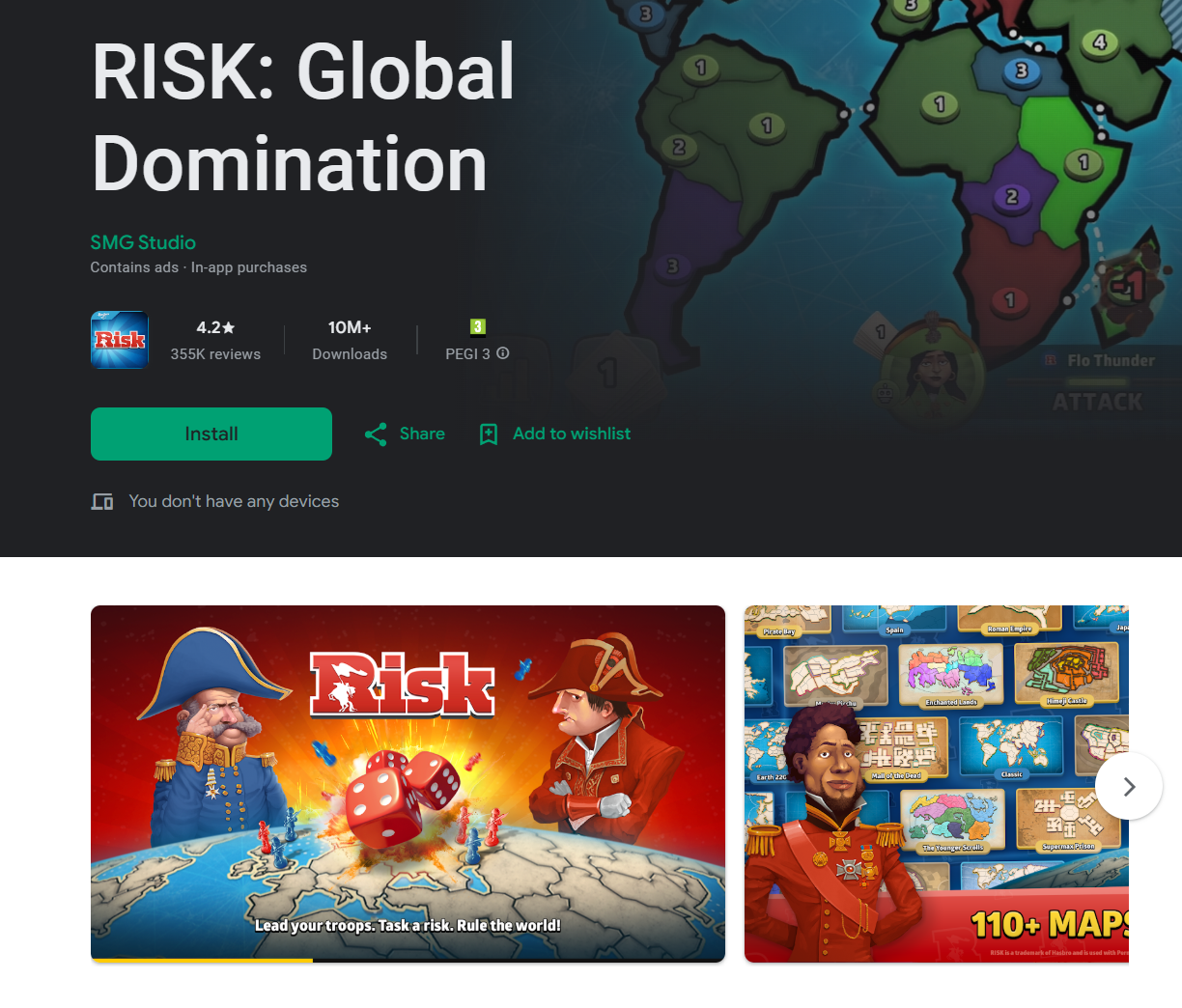
Risk: Global Domination rolls the dice, resolves combat, and updates territory ownership without anyone picking up a plastic soldier. (Risk has +10 M Downloads at Google Play Store)
The game engine is the rules lawyer. It never forgets a modifier, never miscounts a score, and never lets a bad shuffle quietly break the game. For anyone who has watched a Monopoly session derail because nobody can agree on the Free Parking rule (which is not, for the record, in the actual rulebook), this is not a small thing.
Some digital versions also add modes that the physical box never had. Risk: Global Domination includes variants like Zombies, Secret Missions, and Fog of War that layer new mechanics on top of the classic board. Ticket to Ride's digital suite bundles multiple maps and expansions with additional scoring variants in a single client. These are not replacements for the base game. They are things the physical version cannot offer at all.
The Hobby Giants: Wingspan, Root, Terraforming Mars
The more interesting test is what happens when modern, rules-dense hobby games make the same jump.
Wingspan, released by Stonemaier Games in 2019 and winner of the Kennerspiel des Jahres that year, launched on Steam in September 2020. It has since appeared on Nintendo Switch, Xbox, iOS, Android, and PlayStation. The physical game has sold over 2.6 million copies across 27 languages as of March 2026, which makes it one of the fastest-selling hobby board games ever made. The digital edition passed roughly 674,000 copies by early 2023. Those are not competing numbers. They are cumulative.
Root, Leder Games' asymmetric woodland war game from 2018, is a different kind of test. Its whole design is built around four factions that play by completely different rules simultaneously, which is a concept that sounds exciting and is, in practice, extremely hard to learn from a rulebook. The digital edition, released on Steam in September 2020 with later ports to iOS, Android, and Switch, leans hard into scripted tutorials and faction-specific tooltips that walk you through what you can actually do on your turn. Root is a game that benefits more from digital rules assistance than almost anything else on this list.
Terraforming Mars, the stat-heavy engine builder from FryxGames released in 2016, hit Steam via Asmodee Digital in 2018 with iOS and Android following shortly after. The physical game involves tracking oxygen levels, temperature, ocean tiles, tags on hundreds of project cards, production rates across six resources, and a running terraforming rating score, simultaneously, for up to five players. The digital version tracks all of it.
Physical sales have passed 1.5 million copies across at least 16 languages as of 2023. The game is approachable on PC in a way it simply is not on the table until you have played it ten or fifteen times.
What Gets Lost Without the Table
There is no clean answer here, so let's not pretend there is one.
The tactile side of these games is not cosmetic. Wingspan's oversized bird cards and chunky egg tokens are a deliberate design choice; they make the game feel abundant in a way that assets on a screen do not. The weight of Monopoly money, the spread of a Carcassonne tile map across a full table, the satisfying click of Catan resource hexes being sorted before a game: these things are not available on a monitor, and pretending otherwise is dishonest.
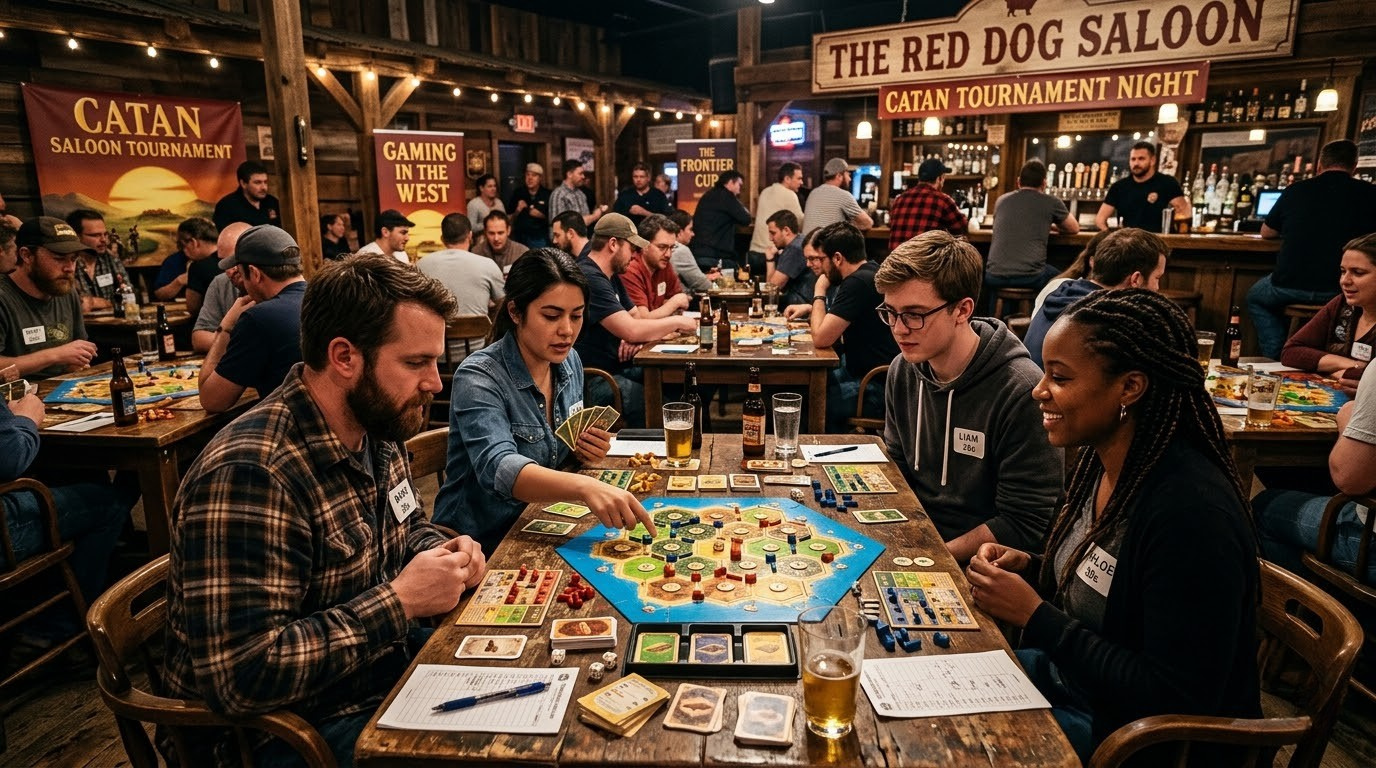
The social layer is also different. Reading body language during a Catan trade, watching someone try to keep their expression neutral when the Risk dice go wrong, the collective groan when a Carcassonne farmer tile shows up at exactly the wrong moment: none of that travels through a Steam lobby. Digital Clue preserves the deduction logic completely. It does not preserve the in-room banter when someone accuses Colonel Mustard in the Kitchen with the Candlestick and everyone at the table knows they are completely wrong.
And some digital adaptations, particularly older ones, feel like playing a spreadsheet with a thin coat of paint. The early Catan and Monopoly clients were not exactly selling the dream. A clunky UI can make a game feel worse than just pulling the box off the shelf, which defeats the entire point.
Which Board Games Work Best on PC
The pattern is consistent enough to state as a rough rule: the more a game asks you to compute, the better it tends to fare on PC. The more it asks you to perform, the worse it tends to fare.
Games with high rules overhead and lots of bookkeeping (Terraforming Mars, Root, Wingspan, Catan variants) shine digitally because the computer can hold all the state the player would otherwise have to track manually. Turn-based games with clear game states (Risk, Carcassonne, Ticket to Ride, Catan) map naturally to PC and support asynchronous multiplayer without feeling compromised.
Party games, bluff-heavy negotiation games, and anything that primarily works because of how people behave in a room together do not survive the transition as cleanly. The mechanics can be reproduced. The energy cannot.
Gateway or Replacement
The available evidence suggests digital board games expand their audiences more than they cannibalize physical sales.
Ticket to Ride is the clearest example. A Forbes piece from 2013 reported that digital versions were directly credited with pushing the game into mass retail. The game has since sold over 18 million physical copies worldwide as of 2024, and its current digital suite spans PC, Mac, iOS, Android, PlayStation, Xbox, and Nintendo Switch with cross-platform play. Neither version hurt the other. They fed each other.
Catan Universe and similar clients saw significant player spikes during 2020 lockdowns, and reports at the time suggested many players later bought physical copies when stores reopened. Wingspan's digital sales and physical sales appear to follow the same upward curve rather than competing curves.
Where it tips toward replacement is in the mass-market, casual end. Scrabble GO has over 40 million downloads, and a meaningful portion of those players have likely never bought a physical Scrabble set and probably never will. Monopoly GO, the mobile game, has generated hundreds of millions in revenue while Monopoly the board game continues to sell, but it is safe to say the audiences are not identical. For legacy brands, the digital product sometimes becomes the primary product. For hobby games, digital tends to remain a supplement.
Why PC Specifically
Mobile handles casual play. PC is where the serious sessions live.
The map-heavy and card-dense games on this list (Carcassonne's expanding tile field, Terraforming Mars' card rows and global parameters, Root's faction boards) are much easier to read on a monitor with a mouse than on a phone screen with a thumb. Steam's strategy and tabletop categories are active communities, and Root, Wingspan, Terraforming Mars, Ticket to Ride, and Catan all have established player bases there.
A full Terraforming Mars session runs 45 to 90 minutes comfortably on PC. That is not a phone session. Async multiplayer exists on PC too (Carcassonne, Ticket to Ride, and Catan Universe all support it), but the long session is still the flagship experience, and it still belongs on a big screen.
The table is not going anywhere. But the best version of some of these games is increasingly the one that runs on your PC, handles the bookkeeping, and lets you actually think about your moves instead of counting cards. That is not a concession. For games like Terraforming Mars and Root, it might be the honest truth.