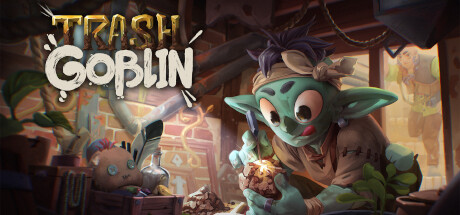
Trash Goblin casts the player as a shopkeeper dealing in curious, salvaged trinkets. The central loop starts with chipping knick-knacks free from dirt and cruft, then cleaning them with a sponge before putting them up for sale. Its gentle framing is explicit: there are no fail states, and the game is designed without pressure rather than as a strict business simulator.
The workshop gives restoration room for playful tinkering. Trinkets can be combined into new forms, while the tool Hugh extracts materials from one object so they can be applied to another, allowing colour and appearance to be remixed. Earnings can go toward tools and shop improvements, and decorating the space adds a personal touch. Customers bring another layer of variety: some browse, some request particular objects, and some have stories to tell. The source also describes a gentle limit on daily activity, alongside customers who return.
Its appeal is in the repeating hands-on rhythm of finding, restoring, adapting, and selling objects, with a colourful parade of customers and a shop the player can shape. That combination makes Trash Goblin less about chasing a perfect business outcome and more about enjoying small acts of curation and craft.