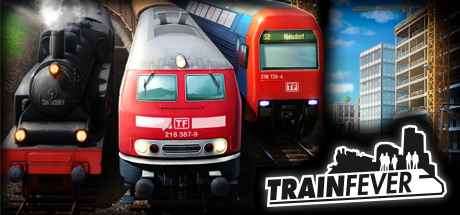
Train Fever is a railroad-focused business simulation that begins in 1850, inviting players to establish and manage a transport company. Its central challenge is to build the infrastructure and services that connect people and goods, rather than simply operate trains on a fixed route.
Players construct railways and stations, purchase vehicles, and manage lines while working to meet people’s needs. The simulation includes both passenger and freight transport, with passenger activity and urban development represented dynamically. Cities evolve as the transport business serves them, linking network decisions to changes in the places around the tracks. The game also includes achievements and experience points, adding progression alongside its core transport-management systems.
Train Fever’s world is shaped by procedural generation, from modifiable terrain and buildings to its urban simulation. Its lack of a grid means tracks and other objects are not confined to right-angle alignments, giving the layout design more freedom. Vehicles span more than 150 years of transportation history, while adjustable zoom and detailed 3D graphics support viewing the evolving network at different scales. Together, these systems make the game a blend of logistics planning and a growing transport landscape.