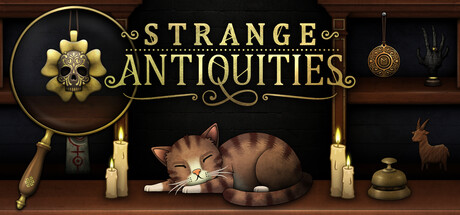
In Strange Antiquities, you take on the role of apprentice thaumaturge and run an occult shop in Undermere, a lakeside town poised between the everyday world and something stranger. Townsfolk arrive with arcane problems, while signs of sickness and encroaching darkness hint that the shop’s work is tied to a wider danger. Its atmosphere pairs a cosy, candle-lit setting with an unsettling mystery, making the shop both a workplace and a threshold to the unknown.
The central routine is close observation and research: examine unusual artefacts, identify them with help from illustrated reference books, and catalogue what you learn. Customers’ needs are unpredictable, and choices about whether to help or curse them carry consequences in a town where people remember misdeeds. The design also moves beyond the counter: hand-drawn maps guide investigations and artefact retrieval, while puzzles and secrets within the shop add another thread of discovery. Even Jupiter, the resident cat, is part of the daily rhythm, asking for affection between stranger errands.
The appeal rests on measured acts of deduction, consequential decisions and gradual exploration, not on multiplayer coordination. Strange Antiquities is described as a new story rather than a direct sequel to Strange Horticulture, though familiar faces may appear; its own Undermere setting and shopkeeping duties establish the particular shape of this occult puzzle adventure.