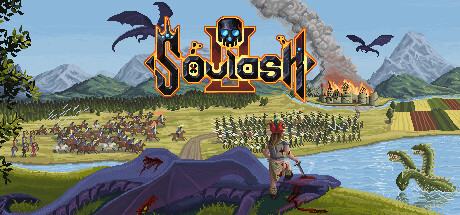
In Soulash 2, the gods have perished, and a new age of strife offers a route toward power and the divine throne. Its blend of sandbox, roleplaying, and traditional roguelike design supports both conquest and less direct ambitions, including trading, farming, stealing, and construction. Each procedurally generated world has a simulated history: settlements develop through trade, work, resource use, food consumption, and war before the player makes their own mark.
Skill-based progression ties new abilities and actions to varied activities, allowing characters to develop through exploration, crafting, building, magic, or combat. Crafting combines chosen resources with recipes that accept magical ingredients, which can give items distinctive properties. Players can raise structures from humble shelters to temples, castles, towers, and pyramids. Settlements may house families who work in fields and shops, and players can start a family to carry a legacy forward.
Three modes set different consequences for death. High Fantasy applies penalties before returning the character at a friendly location. In Dark Fantasy, the character is lost but the world and creations remain, allowing play to continue with someone new. Hardcore brings permadeath that destroys both character and world, without meta progression. This is a single-player game, so its player-count context is a personal campaign through a changing, simulated fantasy world, not a shared multiplayer session.