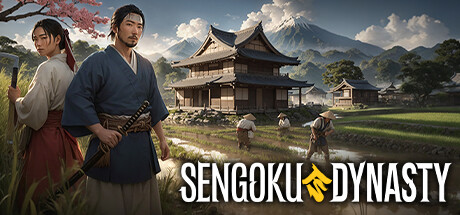
Sengoku Dynasty frames survival as the beginning of a larger civic project. In Nata Valley, a land scarred by famine and war, players start with a house and develop settlements into working communities. The goal is not simply to endure: the game ties village growth to the effort to unify the region and establish a lasting dynasty.
Its day-to-day design connects hands-on work with management. Players gather, hunt, craft and farm, then assign villagers jobs and tools to develop production beyond individual crafting. Workshops, forges and taverns support expanding settlements, while combat offers another route to leadership: weapon choices range from spears to bows and katanas, with combos, blocks, dashes and parries shaping encounters. Players can also choose among Leader, Craftsman, Warrior and Monk paths, and adjust settings such as combat and building options.
Its appeal rests on both personal progression and coordinated community development, rather than on combat alone. Player activity therefore sits in the context of a game that can be approached as a solitary dynasty-building journey or a cooperative effort to grow larger villages.