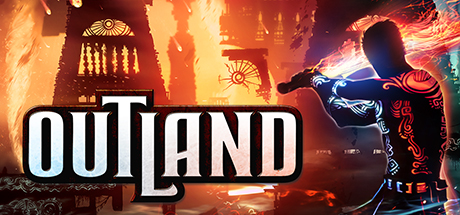
Outland casts its platforming adventure around a struggle between Balance and Chaos. The player’s journey is tied to the fate of the world, with one man positioned between those opposing forces. That premise gives the action a mythic frame, while the game’s shifting visual identity makes the conflict part of its moment-to-moment design.
Its defining mechanic is polarity switching: the player uses powers of light and dark and must adapt as the world changes. Rather than presenting its 2D platforming as a fixed sequence of jumps, Outland describes an adventure that moves between contrasting states. This light-and-dark system is the clearest distinction in its design, linking the platforming challenge to the larger divide at the heart of the story.
The game supports both single-player and multiplayer, with co-op also listed among its modes. Its action, adventure, and indie classifications sit alongside a specific design identity built around dynamic platforming and the ongoing shift between light and darkness.