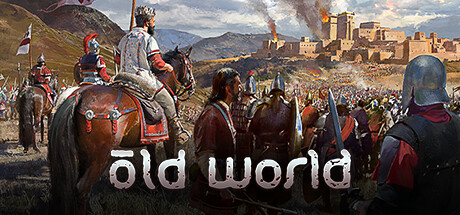
Old World frames empire-building as a struggle that outlasts any one ruler. Players guide a kingdom across generations, balancing the demands of statecraft with marriages, heirs, and the shifting loyalties of noble families. Those families are more than background flavor: placing them in charge of cities brings benefits, while neglecting or empowering them too far can create political trouble. The result is a strategy game where succession and court relationships are part of the work of ruling, not a separate story layer.
Its character system gives that long view a human scale. Leaders and courtiers age, gain experience, develop traits, and eventually die; meanwhile, recruited specialists can govern, conduct diplomacy, lead armies, or tutor heirs. Exploration adds another strand, with wilderness, ruins, and historical or mythological events shaping the kingdom’s encounters. In its 4X design, Orders serve as a shared realm-wide resource: units can move repeatedly until fatigue or depleted Orders stop them, rather than taking only one move per turn. Technology choices are randomized between playthroughs, too, making the route through development less fixed.
Old World supports single-player and several multiplayer formats, including hotseat, asynchronous, and cloud play, as well as scenarios and both generated and handcrafted maps. Its central appeal is the combination of familiar empire expansion with dynastic politics, character lifecycles, and a turn structure shaped by Orders.