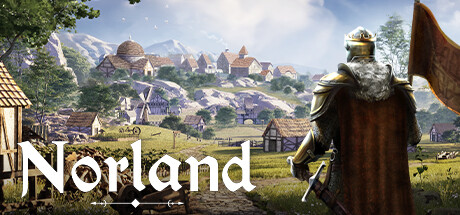
Norland begins after the collapse of an empire, with successor kingdoms competing for power while famine, warfare and invading armies threaten the realm. You lead a small kingdom and its noble family, balancing the survival of your relatives with the growth of your city. The setting makes rule a personal affair: family members have distinct ambitions and relationships, and their rivalries can turn into betrayal or assassination.
Its colony-simulation systems connect noble decisions to the lives of ordinary people. Nobles assign work and priorities, while peasants build structures, harvest resources and produce goods through the city’s production chains. Their satisfaction depends on practical needs such as food, beer and wages, as well as cultural or religious affiliations. Meanwhile, nobles’ skills shape who is suited to tasks such as fighting, negotiation or scholarship. Studying books can unlock technologies, buildings and tools, but knowledge may be lost when its keeper dies unless it has been shared or recorded.
Norland’s play format is single-player, so its interlocking pressures are framed around one player directing the kingdom rather than coordinating with other players. The result is a strategy-focused medieval sim whose conflicts can arise both beyond the kingdom’s borders and within its ruling household.