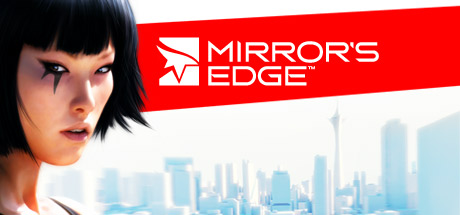
Mirror’s Edge casts Faith as a Runner in a city where information is heavily monitored. Couriers like her carry sensitive data away from prying eyes, but the story soon turns personal: her sister has been framed, Faith is hunted, and a crime has disrupted the city’s carefully controlled surface. The premise makes movement more than a way to cross a level. Running is Faith’s work, her means of escape, and the central language of the game.
Its first-person perspective puts that movement at the forefront. Players chain wall-runs, leaps, and vaults through urban spaces, turning rooftops and other parts of the environment into routes forward. Runner vision highlights the flow of those routes, framing the city as a network of pathways and escape options. The pace alternates between evasion and confrontation: Faith can outrun pursuers, but speed and agility also let her disable or disarm opponents. Chases, puzzles, strategy, and combat all contribute to the action-adventure design.
Its distinctive appeal lies in the tension between route-finding and pursuit, expressed through a first-person view that emphasizes height, impact, and momentum. That focus gives the game a clear identity: navigating the city skillfully is both its signature challenge and Faith’s best chance to survive.