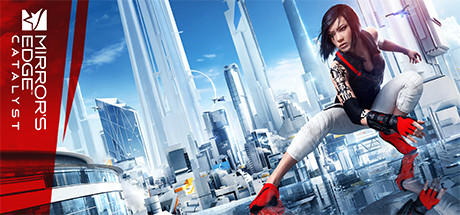
In Mirror’s Edge Catalyst, free runner Faith challenges the forces controlling Glass, a polished high-tech city concealing a darker truth. The city is open to roam, from brightly lit rooftops to underground tunnels, and its spaces are central to the story as Faith works to uncover a conspiracy. The first-person view keeps her movement and the surrounding architecture in focus, making navigation part of the game’s identity rather than a backdrop to the plot.
Traversal is built around maintaining speed and turning the city into a continuous route. Faith can sprint along walls, balance on pipes, climb beneath obstacles, swing around corners, and use wire lines to accelerate. Momentum supports rooftop leaps and slides through narrow spaces, while Shift provides a brief burst in any direction and Quickturn changes course sharply. These movement skills also shape combat: running builds Focus, which protects Faith from enemy attacks, whereas slowing down or taking hits drains it. Players are therefore asked to balance evasive movement with direct engagements against KrugerSec, using light and heavy traversal attacks to keep moving through a fight.
Online features for the title have been discontinued; the documented core design nevertheless centers on Faith’s movement through Glass and her struggle against its oppression.