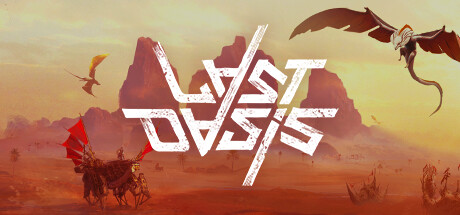
Last Oasis casts survival as a journey through a world where Earth has nearly stopped rotating. The remaining habitable strip lies between scorching desert and frozen wasteland, so Nomads must keep moving between oases to find resources. This harsh setting gives the game’s defining machine a practical role: a Walker, a wooden vehicle powered by wind and inspired by Theo Jansen’s strandbeests, can be configured for travel, hauling, harvesting or combat.
That mobile base supports several ways to make a living. Players can trade in a global, player-driven economy, hunt for rare resources, work as mercenaries or join clans competing for territory and influence. The game describes solo play as viable as well as group and clan play, while voice chat offers a way to meet allies. Combat adds another layer of preparation: directional melee relies on skill, with swords, maces, axes and quarterstaves, while Walker-mounted options include ballistas and repeaters. Grappling hooks help Nomads board vehicles and move through spaces Walkers cannot reach.
The interconnected oases make exploration and risk central to the format: weather can complicate travel, and dangerous regions hold more valuable resources. Large creatures such as the Long Ones are presented as threats that experienced hunters must face together, giving cooperative play a distinct purpose alongside trade, PvP and clan rivalry.