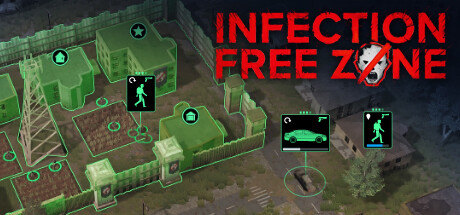
In Infection Free Zone, a fast-spreading virus has brought society down, leaving survivors to build a foothold amid empty cities and hostile infected. Its defining idea is to let players choose a real place: the game uses OpenStreetMap data so a named city or town can become the setting for a new settlement. Familiar streets and landmarks are not just scenery; they inform decisions about where to defend and which abandoned buildings might hold useful supplies.
The settlement-building side combines repurposing existing structures with constructing shelters, production facilities, farms and power houses. Players can strengthen their perimeter with walls, gates and towers, then face nighttime attacks using melee or ranged weapons, vehicles, lighting and the defenses they have prepared. Searching buildings for resources carries its own danger, since infected may be lurking inside. Beyond survival and rebuilding, research toward a vaccine or cure offers another long-term objective, while encounters with other survivor groups can lead either to trade or conflict.
Steam lists Infection Free Zone as single-player, so its player-count context is individual settlement management and defense rather than a shared online population. That format fits a strategy game built around choosing a location, using knowledge of its layout and deciding how to develop and protect one community. The prospect of rebuilding an entire city gives the survival premise a distinctive local focus: the map selection shapes the setting for planning, scavenging and holding out against attacks.