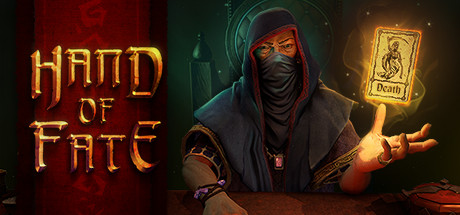
Hand of Fate frames its adventure as a game of life and death beyond thirteen gates, with the player facing the mysterious Dealer’s challenge and working toward the Ace of Skulls. Its defining idea is to make a deck the blueprint for a dungeon journey: chosen cards shape the encounters and spaces that are dealt out as the player ventures onward. That gives the fantasy quest a tabletop feel without keeping its cards abstract.
The hybrid design shifts from preparation to direct action. Cards gathered by the player become fully modeled three-dimensional objects when combat begins, and the ensuing fights use action-RPG combat. Building a deck is therefore also a way to customize the adventure, while gear and items can change each playthrough. The game describes a progression through the Jack, Queen, and King of each suit, alongside encounters, equipment, artifacts, and mysteries to unlock.
Hand of Fate is listed as single-player, so its player-count context is an individual run through a card-dealt adventure rather than a shared multiplayer session. Its blend of deck construction, roguelike structure, and real-time fighting gives that solo format its particular character: the player sets up the risks, then meets them in combat.