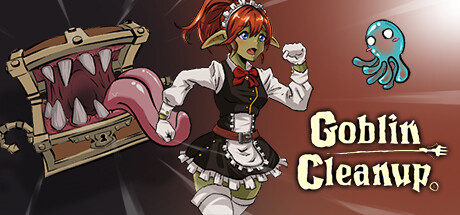
Goblin Cleanup starts where a conventional dungeon adventure might end: after the heroes have moved on, someone has to make the place ready for the next party. You play a goblin cleaner working for the dungeon manager, clearing the aftermath and restoring the setting rather than setting out as a hero. That reversal gives the game its defining joke and its practical objective: a dungeon is a workplace, and the mess left behind is yours to handle.
The work goes beyond scrubbing blood from floors and ceilings with tools such as the Slimop, mimic, and slime dispenser. Objects must return to their original positions, traps need restoring and reactivating, creatures must be respawned and their remains removed, and chests need their loot replenished. The cleanup can still be dangerous: untriggered traps may remain active, creatures may have survived, and the description warns that monsters need to be kept fed. Dynamic dungeons add distinct challenges and hazards, making restoration part of the play rather than a simple cosmetic task.
The game supports solo play as well as online cooperative sessions for up to four players, so its player-count context spans a lone cleaner and a small team sharing the same hazardous reset job. Cooperation is not guaranteed to be orderly: the premise allows companions to work together, or not so cooperatively, and even their remains can become part of the cleanup. Goblin Cleanup’s distinctive format is therefore less about conquering a dungeon than maintaining one after the adventure.