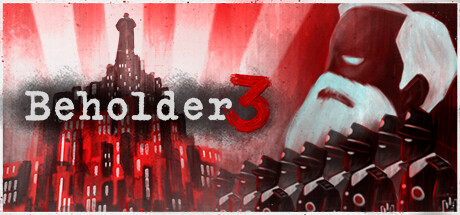
Beholder 3 casts you as Frank Schwarz, a husband and father whose comfortable Ministry job disappears after he is framed. To avoid prison, he accepts a deal with a senior security officer and becomes a government spy posing as a landlord. The setup makes private life and state power collide: Frank has to preserve his family’s prospects while serving a regime that watches and intimidates its citizens.
The game’s central design splits Frank’s work between an apartment block and the Ministry. At home, he can install surveillance cameras, search tenants’ apartments for contraband and carry out orders to remove people from the picture. But maintaining his cover also means handling ordinary landlord duties, including bills, repairs and tenant happiness. At the Ministry, quests can involve promoting state ideology, manipulating flags and spreading propaganda, while factions compete for influence. These duties make surveillance and routine upkeep part of the same balancing act.
Frank can scheme against colleagues and superiors, play political factions against one another, and decide whether to defend the status quo or pursue change and truth. The game frames advancement as a moral calculation: what Frank seeks to regain, and whom he is prepared to sacrifice, shape the premise of his work inside the system. These features set its political intrigue alongside the intimate pressures of keeping up appearances at home.