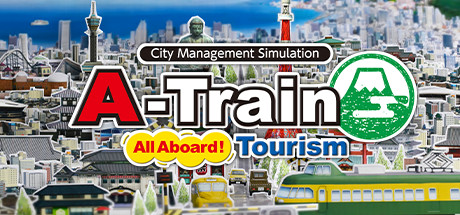
A-Train: All Aboard! Tourism casts the player as president of a railroad company, linking transport decisions to the growth of towns. Stations act as development catalysts, while the player designs stations and lays rail lines, choosing whether to build out an extensive network or improve existing routes. The broader aim is to shape a town and the company together, rather than treat trains as an isolated puzzle.
Tourism gives that planning a distinct destination. Towns feature attractions such as hot spring districts and historical castles, and accessibility affects how many visitors they draw. Railways are part of a wider transport toolkit that also includes buses and ferries. Players can connect places of interest, establish subsidiaries to decorate towns, and advertise to increase company brand power. The design therefore joins network planning with tourism and business simulation, tying visitor access to the development of a place.
The game is listed as single-player, so its player-count context is a management experience centered on an individual’s decisions about routes, destinations, and company growth, not a competitive or cooperative session. Its stated premise leaves room for different urban visions, from a metropolis to a quieter town near natural attractions. That mix of transport logistics and tourism-focused planning is the defining lens for understanding what players do in A-Train: All Aboard! Tourism.